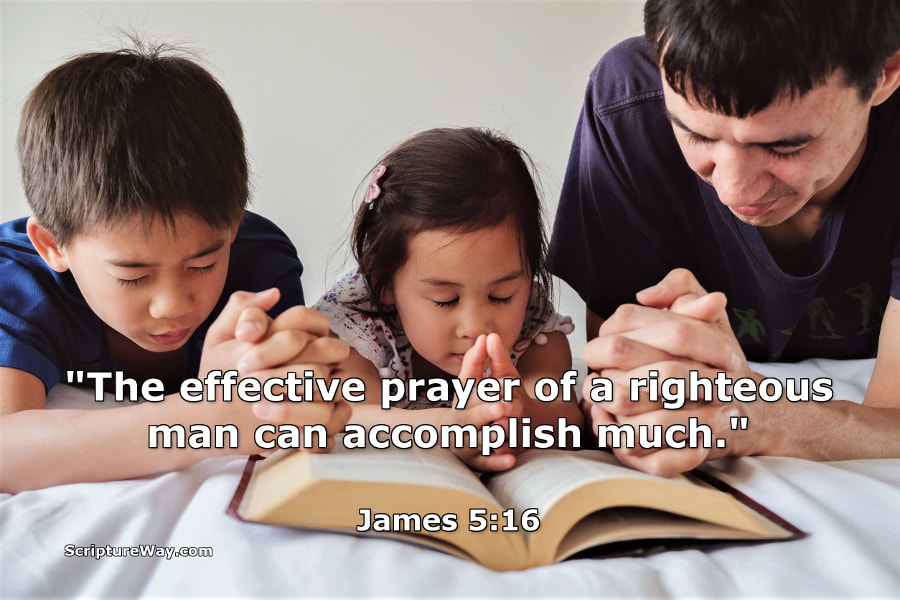
Christian Family Praying Together - Effective Prayer - James 5:16 - 123RF Photo - Used under license
This article presents five Biblical keys to effective prayer -- pray with other Christians, pray in faith, confess your sin, pray according to the will of God, and pray in the name of Jesus. This article also discusses the results of effective prayer.
Introduction
Prayer is one of the most important topics we will ever discuss as Christians. Prayer is communication with God. Prayer helps us receive God's peace and healing in the midst of our problems and concerns. Prayer helps us discern God's will for our lives. Prayer encourages others, protects others, and empowers others to further the ministry of Christ in the world.
It is to our advantage to learn to pray effectively. Why? Because "The effective prayer of a righteous man can accomplish much" (James 5:16). The Bible gives us guidance in how to pray effectively. Keys to Effective Prayer1. Pray with other Christians
James 5:14 instructs us, "Is anyone among you sick? Then he must call for the elders of the church and they [third person plural] are to pray over him, anointing him with oil in the name of the Lord" (James 5:14, brackets added).
Of course, God hears our prayers when we are alone and are praying in secret (Matthew 6:5-6). However, Scripture also teaches us that it is advantageous for us to pray with our companions in Christ. Recall that Jesus sent out his disciples in pairs (Mark 6:7). He gave them [third person plural] authority over unclean spirits, with the results that they cast out many demons, anointed sick people with oil, and healed them (Mark 6:13). 2. Pray in faith
James 5:15 tells us, "And the prayer offered in faith [Greek word pistis, which means persuasion, come to trust] will restore the one who is sick, and the Lord will raise him up, and if he has committed sins, they will be forgiven him" (James 5:15, brackets added, Ref. 1). When we pray in faith, God is pleased because we believe that "He is" and that "He is a rewarder of those who seek Him" (Hebrews 11:6). Note that faith, "divine persuasion," is a gift that God gives to believers (Ephesians 2:8-9, Ref. 1, Acts 16:14).
3. Confess your sin and receive forgiveness
This teaching -- that confession of sin is a prerequisite for effective prayer -- may seem strange to some, even Christians. However, this key cannot be overlooked if we are to pray effectively.
John writes about confessing our sins to God, "If we confess our sins, He is faithful and righteous to forgive us our sins and to cleanse us from all unrighteousness" (1 John 1:9). When we harbor unforgiven sin, or anger or unforgiveness towards others, that sin can block the channel of God's power through us in our prayers. Refer to Matthew 5:22-24, Matthew 6:14-15, James 1:20, and Psalm 66:18. To become effective prayer channels for God when we minister to others or pray for ourselves, we should first take time to confess our sins and to receive God's forgiveness through God's Son, Jesus Christ (1 John 1:7, 9). 4. Pray confidently according to the will of God
John tells us, "This is the confidence [bold resolve] which we have before Him, that, if we ask anything according to His will [God's desire, preferred will], He hears us" (1 John 5:14, brackets added, Ref. 2, Ref. 3).
Praying in God's will includes trusting God with the outcome. Recall that Jesus said to his Father, "Not My will, but Yours be done" (Luke 22:42). As believers in Christ and as children of our heavenly Father (John 1:12), we can learn God's will through prayer (speaking with and listening to God), God's word, and the guidance of the Holy Spirit (John 16:13). If we do not know God's will in a matter, we should ask him (James 1:5). 5. Pray in the name (character and authority) of Jesus
Jesus said to his disciples (and by extension to us as believers), "Whatever you ask in My name, that will I do, so that the Father may be glorified in the Son. (14) If you ask Me anything in My name, I will do it" (John 14:13-14).
When we pray in Jesus' name, we pray representing his character, reputation, and authority. We pray representing Christ, not ourselves (Ref. 4). Praying in Jesus' name should not be just a religious phrase we tack on at the end of our prayers. We should discern God's will and then pray our entire prayer in Jesus' name -- in his behalf and for his glory. The Results of Effective Prayer
Before we close this lesson, let's gain further insight by looking at two word definitions in James 5:16. The New American Standard Bible (1995) says, "The effective prayer of a righteous man can accomplish much" (James 5:16, NASB1995).
In James 5:16 the Greek word for effective in "effective prayer" is the verb energeó. Energeó means energizing, working, and displaying activity (Ref. 5). HELPS Word-studies illustrates this term by the example of "an electrical current energizing a wire, bringing it to a shining light bulb" (Ref. 5). Like the wire that brings electrical energy to turn on a light bulb, our effective prayers are channels for God's energy and power to work change in situations for others. The James 5:16 scripture also tells us our effective prayers can accomplish much. The Greek word translated as can accomplish much is ischuó. Ischuó means to prevail, to engage the resistance with combative, confrontive force to achieve what the Lord gives us faith to achieve (Ref. 6). Our effective prayers engage the resistance. Finally, a word about trusting God. Many times when we pray fervently for others we will see improvements including peace and healing. However, sometimes when we pray in faith and apply all the keys in prayer that God has given to us, the results may not come quickly or turn out the way we hope. In those situations we must continue to trust God. God helps us through all of life's difficulties, and for believers in Jesus Christ, God will ultimately bring us into his presence in heaven.
1 Comment
|
Daily Bible Verse(Click the link above) AuthorMr. Whitney V. Myers. Christian. For more information, please visit the Author Page. Posting ScheduleI plan to provide new postings about once a month. Planned Topics(subject to change) Recent Posts(most recent three months) Popular Posts(top 10) Categories
All
Archives
July 2024
|
 RSS Feed
|
The ScriptureWay site provides Bible Teachings that point to Jesus. The Bible teaches that believing in Jesus Christ is the only way to heaven.
"I am the way, and the truth, and the life; no one comes to the Father but through Me." -- Jesus speaking in John 14:6 
|
|
|
Copyright 2018-2024 Whitney V. Myers |
Listed in Feedspot's Top 100 Bible Study Blogs and Websites |